Choosing a game engine in 2026 is harder than ever. Unity, Unreal Engine, and Godot dominate the market, but new alternatives are emerging that solve problems these tools created over the last decade. If you're an indie developer, a small team, or a solo creator, the engine you choose directly affects how fast you ship your game.
This guide compares Unity, Unreal, Godot, and Cave Engine across the factors that actually matter: development speed, scripting workflow, performance, pricing, and overall complexity. By the end, you should know which engine fits your workflow and project goals.
Quick Comparison: Unity vs Godot vs Unreal vs Cave
| Engine | Main Language | Best For | Engine Size & Complexity | Pricing |
|---|---|---|---|---|
| Unity | C# | Mobile games, large ecosystem | Medium | Free tier + paid plans |
| Unreal Engine | C++ / Blueprint | AAA graphics, large teams | Very large | 5% royalty after $1M |
| Godot | GDScript / C# | Open-source and hobby projects | Small to medium | Free |
| Cave Engine | Python + C++ backend | Fast 3D indie development | Lightweight | No royalties |
Each engine solves a different problem. The best one depends on your experience level, the scale of your project, and how quickly you want to iterate.
Unity
Unity remains one of the most widely used engines in the world. According to Unity’s own statistics, over 50% of mobile games are built with Unity, largely due to its large ecosystem and marketplace.
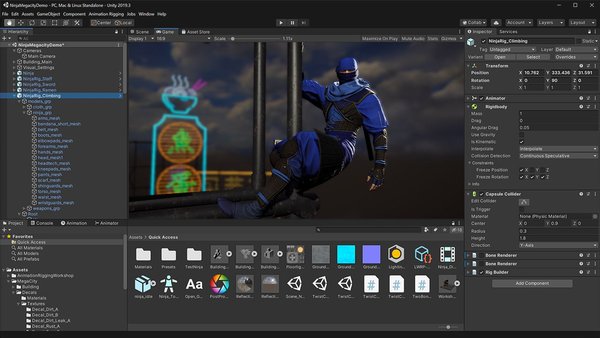
Unity’s strengths include:
- Huge asset store
- Strong community
- Large library of tutorials
- Mature tooling for mobile and cross-platform games
Development Workflow
Unity projects are typically written in C# scripts using MonoBehaviour classes. While powerful, the workflow includes frequent compilation and domain reloads that slow iteration during development.
Unity also relies heavily on external packages and pipeline configuration, especially when using newer render pipelines such as URP or HDRP.
Best Use Cases
Unity works well if you:
- Want strong mobile support
- Need a large ecosystem of assets
- Work with existing Unity teams or pipelines
For indie developers focused purely on desktop 3D games, Unity can sometimes feel heavier than necessary.
Unreal Engine
Unreal Engine is the most powerful AAA-focused engine available today. It is widely used by large studios for high-end graphics and cinematic production.
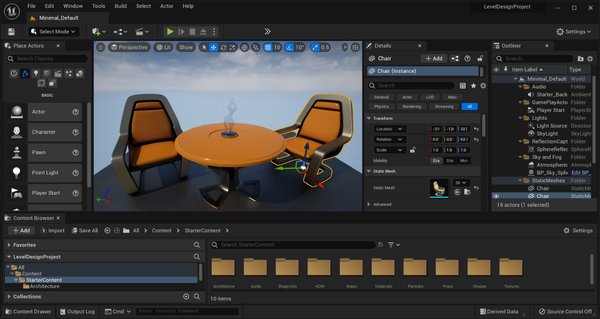
Epic Games reports that Unreal powers many of the industry’s biggest titles and film productions.
Development Workflow
Unreal projects usually combine:
- C++ gameplay code
- Blueprint visual scripting
- Large asset pipelines
- Shader compilation and build steps
While Unreal offers incredible visual fidelity, it comes with a steep learning curve and complex production pipelines.
Best Use Cases
Unreal is ideal if you:
- Need AAA-level graphics
- Work with a large team
- Build massive open-world games
- Want access to Epic’s ecosystem
For small teams and solo developers, Unreal can introduce more complexity than necessary.
Godot
Godot is a popular open-source engine that has grown rapidly in the past few years. Its lightweight architecture and free licensing model make it appealing to indie developers.
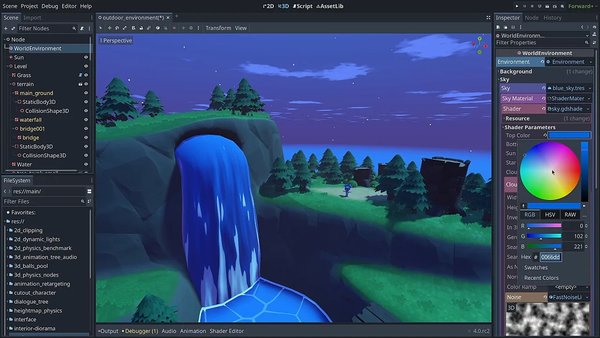
The engine uses GDScript, a scripting language similar to Python.
Development Workflow
Godot organizes scenes using a node-based architecture, where nodes are combined into reusable scenes.
Advantages include:
- Open source
- Lightweight editor
- Fast startup times
- Simple scripting language
However, Godot’s 3D tooling has historically lagged behind Cave, Unity and Unreal, although recent versions have improved significantly.
Best Use Cases
Godot is a good choice if you:
- Prefer open-source software
- Build 2D games
For large commercial 3D games, developers sometimes need additional tools and plugins.
Cave Engine
Cave Engine is a newer engine designed specifically for fast 3D desktop game development. It takes a different philosophy from most mainstream engines: reduce friction and maximize iteration speed.
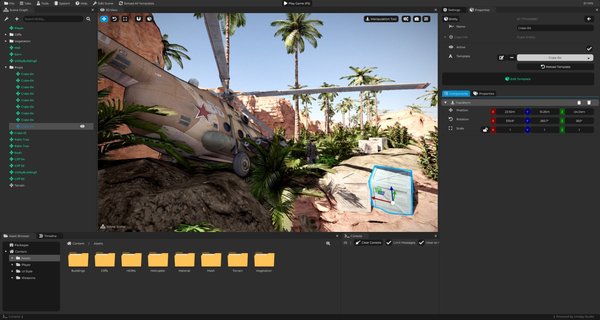
The engine is written in C++ for performance but scripted entirely in Python, allowing developers to write gameplay code quickly while the heavy systems run in optimized native code.
The engine focuses on simplicity, speed, and practical tools for indie developers.
Development Workflow
Cave removes many common bottlenecks found in modern engines.
For example:
- No visible shader compilation
- No script compilation cycles
- Lightweight editor startup
- Integrated systems out of the box
The goal is simple: open the engine and immediately start building gameplay.
The architecture follows an entity-component model, where entities gain behavior by attaching components such as physics, mesh rendering, UI elements, or Python scripts.
This keeps projects modular while avoiding deep inheritance hierarchies that often appear in other engines.
Key Features
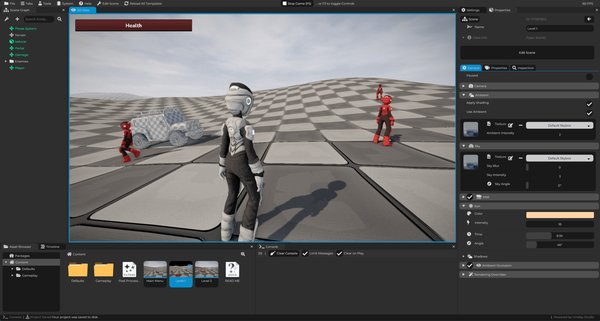
Cave includes many systems built directly into the engine:
- Physically based rendering pipeline
- Bullet physics integration
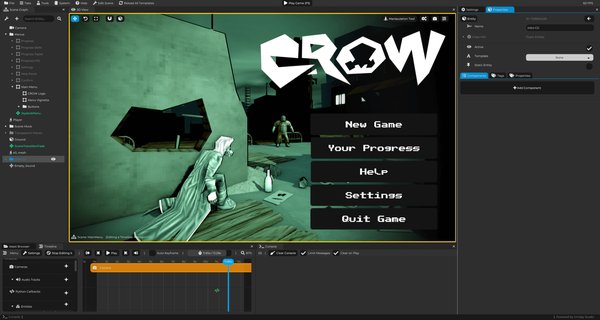
- Timeline system for cutscenes
- Particle systems
- Terrain tools
- Hierarchical state machines for AI
- Integrated UI system
- Python scripting with C++ backends
Because most heavy systems run in C++, Python scripts mainly orchestrate gameplay logic while performance-critical work remains native.
Best Use Cases
Cave works best if you:
- Build 3D desktop games
- Want fast iteration
- Prefer Python scripting
- Work solo or in small teams
- Want a lightweight engine without royalties
The engine was designed around the idea that development tools should stay out of the developer’s way and allow rapid experimentation.
Which Engine Is Best for Indie Developers?
For most indie developers, the key factors are:
- development speed
- simplicity
- learning curve
- licensing cost
Here is how the engines generally compare:
Unity
Good balance of power and ecosystem but sometimes slowed by configuration complexity.
Unreal
Extremely powerful but best suited for large productions.
Godot
Excellent for open-source enthusiasts and many 2D games.
Cave
Designed specifically for fast iteration and indie-scale 3D development.
Which Engine Is Best for 3D Games?
If your focus is 3D desktop games, these differences matter most:
| Engine | Strength |
|---|---|
| Unreal | Highest graphical fidelity |
| Unity | Flexible ecosystem |
| Godot | Open-source engine |
| Cave | Fast iteration and simple workflow |
The best engine ultimately depends on whether you prioritize:
- graphics power
- ecosystem size
- open-source philosophy
- development speed
Final Recommendation
There is no universal “best” game engine. Each one serves a different type of developer.
Choose Unity if you need a massive ecosystem and mobile support. Choose Unreal Engine if you want AAA graphics and production pipelines. Choose Godot if you prefer open-source tools and lightweight development. Choose Cave Engine if your goal is building 3D games quickly with a simple workflow and Python scripting.
For many indie developers in 2026, development speed and simplicity matter more than raw engine power. Tools that allow faster iteration often lead to finishing more games and shipping them sooner.
FAQ
What is the best game engine for beginners?
Many beginners start with Unity or Godot because of the number of tutorials available. Engines that use simpler scripting languages, such as Python-based tools, can also reduce the learning curve.
Cave Engine is a very good alternative here because of its design philosophy of not needing tutorials at all. So out of these four, the engine that we will learn faster is probably Cave.
What engine do most indie developers use?
Unity and Godot are currently the most common engines among indie developers, but new lightweight engines focused on faster workflows are becoming increasingly popular.
Is Unreal Engine good for solo developers?
It can be used by solo developers, but its complexity and production pipelines are often designed for larger teams.
Is Python good for game development?
Python works well when used as a scripting layer on top of optimized C++ systems. This approach allows rapid development while keeping performance high.
Do game engines take royalties?
Some engines do. Unreal Engine charges royalties after a revenue threshold. Others use subscriptions or one-time licenses without royalties.
Which engine should I choose in 2026?
While I highly recommend taking a deeper look at Cave Engine, you should ultimately choose the engine that matches your goals, experience, and workflow. The best engine is the one that allows you to finish and ship your game.