Cave Engine has changed a lot in 2026, and the biggest milestone is already here: Logic Bricks shipped in Cave 1.6. That means Cave now has a full visual scripting solution with parity with the Python API, giving you two serious ways to build game logic: Python code or no-code visual scripting.
This roadmap started as a January 2026 video, but this updated version reflects where Cave stands now in mid 2026. The short version is simple: Cave is becoming faster, easier, more visual, and more useful for solo developers, indie teams, artists, and anyone who wants a focused 3D desktop game engine.
IMPORTANT: While the title states that this is Cave Engine 2026 roadmap, it does not mean that all the features below are promised for 2026, or that those features are promised at all. The title simply means that this is the current idea that we want to proceed with Cave starting in 2026. None of those features are promises.
The Big Cave Engine 2026 Highlights
Cave Engine remains focused on one clear goal: being one of the best game engines for 3D desktop game development, especially if you want fast iteration, Python scripting, and a clean workflow. The engine is written in C++, scriptable in Python, and now also supports visual scripting through Logic Bricks.
Here are the main roadmap highlights:
| Area | Status | What it means |
|---|---|---|
| Logic Bricks visual scripting | Released in Cave 1.6 | Build gameplay without code, using the same API exposed to Python |
| Python API parity | Live with Logic Bricks | Learn once, use the same concepts in code or bricks |
| Shader Graph | Planned | Visual workflow for shaders, materials, and post-processing |
| Linux Wayland support | Work in Progress | Better Linux compatibility beyond X11 |
| AI and enemy programming | Work in Progress | Better HSM tools, navigation mesh, and pathfinding |
| Web export | Work in Progress | Export Cave games to run in browsers through WebGL |
| UX improvements | Ongoing | More tutorials, better import workflows, more demo projects |
| DirectX 12 backend | Future | A key step toward better Windows rendering options and Xbox export |
| Console support | Long-term idea | Xbox first, then possibly PlayStation and Switch later |
| ---- |
This roadmap matters because game developers are actively rethinking their engine choices. The 2026 GDC State of the Game Industry report says Unreal Engine was the primary engine for 42% of surveyed developers, with Unity at 30%, while Godot gained attention among newer indie developers. Source.
That leaves a clear opening for focused engines like Cave: fast, lightweight, built for desktop 3D, and made for developers who want less friction.
Logic Bricks Is the Main Event
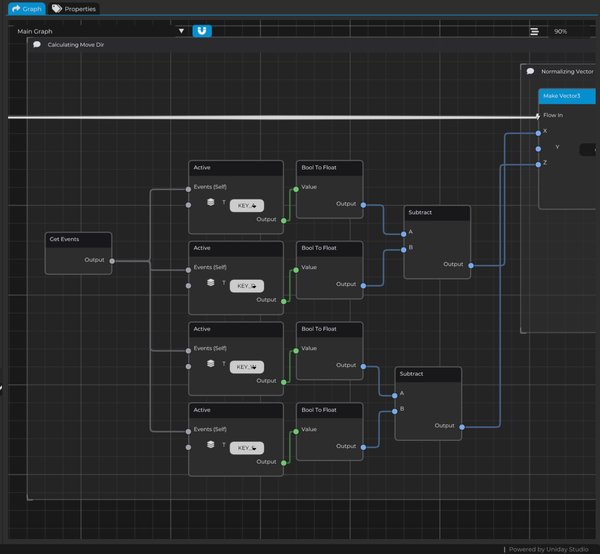
Logic Bricks is the biggest Cave Engine update of 2026 so far. It turns Cave into a visual scripting game engine while keeping the power of the existing Python workflow. You can build gameplay visually, connect logic blocks, call engine APIs, and work without writing traditional code. This matters because many developers want to make 3D games without spending months learning C++, C#, or complex engine architecture. Python already made Cave more accessible than many engines, but Logic Bricks lowers the entry barrier even more.
You can now start with visual scripting and move into Python later without relearning the engine.
1:1 Python API Parity
The most important part of Logic Bricks is parity. Cave is designed so the same engine functionality exposed to Python is also available through Logic Bricks. That makes visual scripting a real gameplay system, not a limited beginner mode.
“The goal is simple: everything you can do with Python, you can do with Logic Bricks too.” Guilherme Teres, creator of Cave Engine
This also makes learning easier. If you understand how something works in Logic Bricks, you’re already learning the Cave Python API at the same time. If you understand something in Python, you can apply the same idea visually.
That is a huge advantage for beginners, artists, designers, and mixed teams. A programmer can build systems in Python, while a designer can inspect or recreate logic visually. A solo developer can prototype with Logic Bricks, then move performance-sensitive or reusable logic into Python when needed.
Why This Makes Cave Stronger Than Before
Cave already had a strong identity as a Python game engine for 3D desktop games. Logic Bricks adds another layer to that identity: fast visual iteration! You can open Cave, create a project, build game logic, test it, and keep moving without waiting for shader compilation, code compilation, or massive engine reloads.
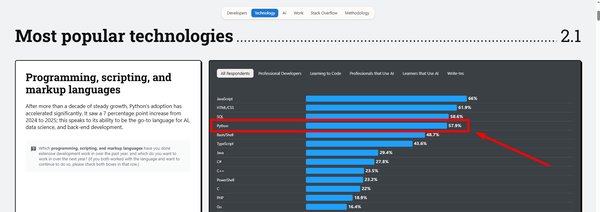
That is especially important in 2026 because Python keeps growing as a practical developer language. Stack Overflow’s 2025 Developer Survey notes that Python adoption increased by 7 percentage points from 2024 to 2025, driven by its role in AI, data science, and backend development. Source. Cave takes that familiar language and places it inside a game engine built for fast 3D production.
What Cave Is Still Focused On
Cave is staying focused: The engine is not trying to become every type of tool for every possible game. It is built for 3D desktop games, fast iteration, Python scripting, visual scripting, and a workflow that helps you make games instead of fighting the editor. That focus is important beause bany engines grow by adding more and more systems until the workflow becomes heavy.
Cave is going in a more direct direction:
- Give you the systems you need, keep the engine lightweight, and make the editor clear enough that you can understand it by using it.
The "DON'Ts:"
No Extra Scripting Languages
Cave is staying with Python and Logic Bricks. There are no current plans to add C, Lua, C++ gameplay scripting, or another scripting language. That decision keeps the engine focused and makes the API easier to maintain.
This also strengthens Cave’s identity as a Python game engine:
You can write gameplay in Python, build visually with Logic Bricks, and rely on the C++ backend for performance-heavy engine systems. That creates a clean split between ease of use and runtime performance.
No 2D Mode in Cave
Cave is also staying focused on 3D. A full 2D mode is not part of the Cave Engine roadmap. The idea is simple: a 3D engine should stay great at 3D instead of carrying systems that do not serve its core use case.
That makes Cave a better fit for desktop 3D games, first-person games, third-person games, top-down 3D games, vehicle games, adventure games, RPGs, horror games, and other 3D projects. If you want a focused Unity alternative, Unreal alternative, or Godot alternative for lightweight 3D desktop development, this is where Cave makes the most sense.
The 2026 Roadmap After Logic Bricks
Logic Bricks shipped, but the 2026 roadmap still has big items ahead:
These features are roadmap targets and priorities, so they can change as development continues. Cave is still actively evolving through bug fixes, UI improvements, UX improvements, and production usage inside Uniday Studio.
The next roadmap items focus on three practical areas:
- better platform support,
- better AI workflows,
- and better learning resources.
That combination matters because a game engine grows faster when users can build more types of games and learn the tool without friction.
Linux Wayland Support
Cave already runs navitely on Linux, but Wayland support is an important roadmap target. Right now, Linux support works very well in X11, while Wayland still needs a bit more work. Since more Linux users are moving to Wayland, this matters for long-term compatibility.
This work also connects with future system-level improvements: Cave currently uses SDL for windowing and input handling, but one future idea is replacing parts of that with a custom implementation. The goal is better control, smaller builds, and fewer platform-specific problems. Currently, it's still an idea.
AI, HSM, Navigation Mesh, and Pathfinding
Cave already has a Hierarchical State Machine system (also known as HSM)... This is useful for enemies, NPCs, gameplay states, combat logic, patrol behavior, and modular gameplay systems. The 2026 roadmap includes continuing to improve that system.
The bigger AI feature is navigation mesh and pathfinding.
The roadmap considers two paths:
- integrating Recast
- or building a custom in-house solution.
The pros and cons are clear for each option: Recast is widely used and battle-tested, while a custom solution could fit Cave’s internal data and workflow more directly.
While we are sharing some backend insights here, for you, the result is what matters: better enemy movement, better AI navigation, and easier NPC behavior. That pushes Cave closer to being a stronger engine for shooters, stealth games, RPGs, survival games, and open-world style projects.
Web Export (huge)
Web export is another big roadmap target: I would say that it will be Cave's next big thing after the Logic Bricks.
The goal is to export Cave games to run in the browser through WebGL. That would be useful for demos, game jams, portfolio projects, playable marketing pages, and instant game sharing.
Current Status: The export is already compiling through Emscripten, with the main blocker around rendering through OpenGL/WebGL. That makes the feature promising, but still experimental. It is an important direction because web builds make it much easier for players, publishers, and communities to try your game instantly.
Better Tutorials, Demo Projects, and Import Workflow
Cave has made a big jump in learning experience. The engine now includes a complete Getting Started guide built to help new users understand the editor, create projects, learn the workflow, and start building real games faster. This guide is available in English, Portuguese, French, Russian, German, Hindi, Japanese, Simplified Chinese, and Spanish, which makes Cave much easier to adopt for developers around the world.
The learning path also continues outside the engine. The Uniday Studio website now includes Learn Quests, including material for people who want to learn Python and understand the logic side of game development. Cave also has a brand-new Python API reference, giving developers a much better way to search functions, classes, methods, and engine systems while building games.

What this means for new Cave users
You can now start learning Cave with a clearer path:
You don’t need to guess where to begin, search random videos, or reverse-engineer examples just to understand the basics.
The Getting Started guide gives you the first steps, Learn Quests help you improve your skills, and the Python API reference gives you the technical details when you need them.
This is especially important because Cave now has two main logic workflows: Python scripting and Logic Bricks visual scripting. New users can begin visually, move into Python later, or use both depending on the project. That makes Cave easier for artists, designers, beginners, and programmers working on the same game.
Demo projects and asset importing
More demo projects are still a major goal. A good demo can teach faster than a long explanation because you can open it, inspect it, play it, break it, and rebuild it. Cave already includes starter project templates, but more complete examples for AI, terrain, vehicles, UI, shaders, and game genres would make the engine even easier to learn.
The asset importing workflow is also getting a lot of love: Importing models, animations, textures, audio, and other assets should feel fast and predictable. Cave already supports common asset workflows, but the goal is to keep improving clarity, feedback, error reporting, and the small steps that make production smoother.
Visual Workflows Beyond Logic Bricks
Logic Bricks is now live, and that changes the way you can build games in Cave. You can create logic visually, use the same API concepts as Python, and prototype gameplay without writing traditional code. That alone makes Cave much more accessible.
The next big visual workflow target is a Shader Graph. Cave already supports custom GLSL shaders, custom materials, and post-processing, but raw shader code can be intimidating. A visual shader system would make materials, effects, and post-processing easier to build for artists and technical users.
Shader Graph for materials and post-processing
The goal of Shader Graph is to let you create visual shader networks for materials and effects. Instead of writing GLSL by hand, you would connect nodes and build the look of your game visually. This would make it easier to create stylized materials, procedural effects, terrain shaders, water, screen filters, and other visual features. This matters because Cave already gives advanced users a lot of shader control. A Shader Graph would take that power and make it more approachable. It would also fit perfectly with the Logic Bricks direction: visual tools where they help, Python and code where they make sense.
A better workflow for artists and solo developers
Most indie developers need to move fast!
You may need to handle gameplay, visuals, UI, animation, audio, and publishing by yourself. Every visual tool that saves time gives you more energy to focus on the game itself.
That is why Logic Bricks and Shader Graph are such important pieces of Cave’s future. They make the engine easier to use without removing the deeper control that experienced developers need. You can start simple, then go deeper as your project grows.
Future Plans: DirectX 12, Xbox, and Deeper Engine Work
Cave’s long-term future includes deeper rendering work. The main technical goal is a more flexible renderer backend system, so Cave can support more than one graphics API.
Today, Cave is based on OpenGL, but future rendering backends can open the door to better platform support and more export targets.
The most important backend direction is DirectX 12. DirectX 12 matters for Windows, but it also matters because it is a key step toward Xbox support. A DirectX 12 backend would give Cave a stronger technical foundation for future console-related work.
Renderer hardware interface
The renderer hardware interface is the layer that lets Cave talk to the graphics API. A cleaner abstraction means the engine can support OpenGL, DirectX 12, Vulkan, or other backends without rewriting the whole renderer every time. This is deep engine work, but it affects the future of the entire project. This kind of work is important because Cave aims to stay lightweight while growing in capability. Adding more platforms should not turn the engine into a bloated tool. The goal is to keep Cave fast, clean, and focused while still preparing it for larger production needs.
Xbox as the first console direction
Xbox is the first serious console direction for Cave because of the DirectX 12 connection. It is a practical target that fits the renderer work already planned.
It also makes sense because Guilherme has previous professional experience with console porting, especially around Xbox-related workflows.
Console support is a long-term goal. It depends on renderer maturity, SDK access, platform requirements, testing, packaging, certification, and many technical details. The important point is that Cave’s architecture is moving in a direction that can support this kind of future.
Internal system replacements
Some future work may involve replacing internal dependencies with custom Cave systems. These changes are less flashy than Logic Bricks, but they can make the engine smaller, faster, easier to maintain, and easier to port. Possible long-term internal work includes replacing SDL with custom platform backends, exploring a smaller Python runtime option, improving or replacing physics systems, and reducing dependency weight where it makes sense. These decisions follow Cave’s core idea: keep the engine lean, practical, and direct.
Long-Term Ideas for Cave Engine
Some features are ideas for the future rather than active release targets. They show where Cave could go as the engine grows, the community expands, and the technical foundation becomes stronger.
These ideas include Android export, iOS export, Mac support, Vulkan, BGFX, PlayStation, Nintendo Switch, and more built-in creation tools.
BGFX is one of the more interesting possibilities because it could help with multiple rendering backends and broader platform support. Vulkan is also an important possible direction, especially for modern rendering and Linux support. These ideas depend on timing, demand, and how they fit Cave’s long-term architecture.
Mobile, Mac, and other platforms
Cave is currently focused on 3D desktop game development, but more export targets can make the engine useful to more developers. Android, iOS, and Mac support would expand the types of projects you can ship. These platforms require serious work, especially around rendering, input, packaging, performance, and platform rules.
The priority remains clear: make Cave excellent for 3D desktop games first.
A strong core engine makes every future platform more realistic. Platform support should grow from a solid foundation instead of being rushed.
Built-in creation tools
Another long-term idea is adding basic creation tools directly inside Cave. This could include simple modeling, rigging, texturing, or other lightweight asset creation workflows. The goal would be fast prototyping inside the engine, especially for developers who want to block out ideas quickly.
This would not replace Blender, Maya, Substance, or other dedicated tools. It would make Cave faster for early production, placeholders, simple edits, and quick iteration. For solo developers and small teams, that kind of workflow can save a lot of time.
Why This Roadmap Makes Cave a Stronger Engine Choice
Cave is getting stronger in the areas that matter most for indie 3D game development: fast iteration, visual scripting, Python scripting, better learning resources, better documentation, stronger AI tools, and future platform expansion. The release of Logic Bricks in Cave 1.6 is the biggest proof of that direction. It makes Cave easier to start with while keeping the power of the Python API.
If you want a lightweight 3D game engine, a Python game engine, a visual scripting game engine, or a focused Unity, Unreal, and Godot alternative for desktop games, Cave is becoming a more serious option every release. The engine is growing without losing its main identity: fast, simple, direct, and built for developers who want to make games.
Start here
FAQ
Does Cave Engine have visual scripting?
Yes. Cave Engine has Logic Bricks, released in Cave 1.6. It is a full visual scripting solution with parity with the Python API, so you can build gameplay visually while using the same engine concepts exposed to Python.
Is Cave Engine a Python game engine?
Yes. Cave Engine is written in C++ and scriptable in Python. The heavy engine systems run in C++, while your gameplay logic can be written in Python or built visually with Logic Bricks.
Can I learn Cave Engine without already knowing Python?
Yes. You can start with the Getting Started guide and Logic Bricks, then learn Python later through Learn Quests and the Python API reference. This makes Cave easier for beginners, artists, and designers who want to start building games without heavy programming knowledge.
Is Cave Engine good for 3D desktop games?
Yes. Cave is designed specifically for 3D desktop game development. It focuses on fast iteration, lightweight builds, Python scripting, Logic Bricks visual scripting, rendering, physics, animation, UI, terrain, timelines, and practical tools for indie developers.
Will Cave Engine support 2D games?
Cave Engine is focused on 3D. A full 2D mode is not part of the current Cave roadmap because the engine is designed to stay specialized in 3D desktop development.
Will Cave Engine support web export and consoles?
Web export is a roadmap target, and console support is a long-term goal. Xbox is the first serious console direction because of the planned DirectX 12 work, but this depends on deeper renderer work, SDK access, and platform requirements.